Members
As a member of the network, you can add, update or remove your personal details for display on this page.
-
Frans Adriaans
-
Hosam Ahmed
Hossam is a lecturer of Arabic in Leiden University. He is mainly interested in how computational methods can contribute to improving second language learning and assessment, as well as how they can improve our understanding of natural langauge syntax.
-
Raquel G. Alhama
Raquel G. Alhama is an Assistant Professor at the Institute for Logic, Language and Computation, at the University of Amsterdam. Her research focuses on using techniques from computational linguistics and natural language processing to deepen our understanding of [human] language learning and language evolution.

-
Eedan Amit-Dani
Eedan Amit-Danhi is a Assistant Prof. of Digital Humanities and Media at the Centre for Media and Journalism Studies at the Faculty of Arts, University of Groningen. She studies the role of political visuals in the informational landscape of social media and the digital world.
-
Aviv Barnoy
Aviv Barnoy is a researcher specializing in the intersection of AI, misinformation, knowledge, and trust. His work explores how AI shapes information credibility, user perceptions, and responsible technology use. Aviv emphasizes critical perspectives on trust dynamics, particularly addressing misinformation and fostering reliable, ethical interactions between humans and AI systems.
-
Fred Blain
Fred Blain is a researcher and assistant professor in the Department of Intelligent Systems at Tilburg University, within the Research Center for Cognitive Science and Artificial Intelligence. In short, he is primarily known in the AI and computational linguistics community for his work on machine translation evaluation, translation quality estimation, and human-centered language technologies.
-
Vincent Blok
-
Nathalie Borst
Nathalie Borst is team leader of the editors within the Communications and Marketing Department of the Faculty of Humanities. Nathalie advises on how online communication can contribute to achieving strategic goals.
-
Roberto Cerina
-
Vivian Hsueh Hua Chen
Vivian Chen is an associate professor in AI & Society. Her research interests include how technology brings changes in communication behaviors and facilitate both negative and positive individual and social outcomes, as well as the social and psychological impact of interactive digital media, which includes AI, video games, virtual reality, and social media.
-
Rogier Creemers
Rogier Creemers is a Lecturer in Modern Chinese Studies. With a background in Sinology and International Relations, and a PhD in Law, his research focuses on Chinese domestic digital technology policy, as well as China's growing importance in global digital affairs. He is the principal investigator of the NWO Vidi Project "The Smart State: Big Data, Artificial Intelligence and the Law in China".
-
Crit Cremers
-
Lettie Dorst
Lettie is an Associate Professor at Leiden University Centre for Linguistics. She teaches courses in (literary) translation, subtitling and translation technology. Her research focuses on metaphor translation, translating style, and machine translation literacy. She currently leads an NWO Vidi project on Metaphors in Machine Translation.

-
Marlieke van Ernst
Marlieke Ernst is the Strategic Knowledge Broker for the Faculty of Humanities.
-
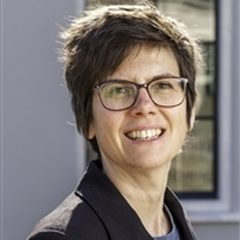
Karin van Es
Karin van Es is associate professor of media and culture studies and project lead for the Humanities at Data School, both at Utrecht University. Her work is situated at the intersection of television studies, software studies and critical data and algorithm studies. Her current research focuses on streaming video culture and industries.
-
Katleen Gabriels
Dr. Katleen Gabriels is a moral philosopher and a philosopher of technology. She is an associate professor at Maastricht University. She researches the co-shaping of morality and technologies (e.g., AI; monitoring technology; VR). Her work contributes to the fields of empirical ethics and philosophy of technology, combining media sociology and moral scientific research.
-
Walter Nkwi Gam
Walter Gam Nkwi is a lecturer at the Institute for History, University of Leiden since 1 September 2019. He also lectures at the Den Haag campus where he has been the coordinator of the African section since 2021. He is Associate Professor of Social History since 2018, promoted following ARRETE NO19-00007/ MINESUP/SP-CCIU Du 22 JAN 2019 of the Minister of Higher Education, Cameroon.
-
Marloes Geboers
Marloes Geboers is Assistant Professor Digital Methods for AI Platforms at the University of Amsterdam (ILLC and Media Studies dept). Her research interests relate to the platformed visualities of political ideologies and propaganda. She has a background in journalism and political science.
-
João Gonçalves
João Gonçalves is Associate Professor in the Department of Media and Communication at Erasmus University Rotterdam (Netherlands). His research relates to artificial intelligence, democracy and the impacts of digitalization.
-
Yoonai Han
I am a human geographer with expertise on urban and digital studies, contemporary Korea, and East Asia. I examine shifting forms of displacement at the intersection of class, gender, land, and technology. My projects are informed by critical urban theories, political economy, and feminist thoughts.
-
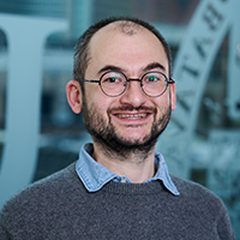
Christopher Handy
Christopher is a research software engineer at Leiden University. He works with humanities researchers to create custom software projects, often for low resource languages, linguistics and area studies research. Christopher has a PhD in Religious Studies (McMaster University, 2016), and specializes in Buddhist monastic law (vinaya) and linguistic politeness.
-
Kun He
Kun He is a postdoc researcher at the University of Groningen. He is an interdisciplinary scholar, with a background in media studies, Chinese populism, computational social science, human-AI interaction and AI safety. He has published several articles on journals, such as Convergence, Media and Communication, Chinese Journal of Communication, etc.
-
Paula Helm
Paula Helm is Assistant Professor of Empirical Ethics and Data Science. Her work is situated at the convergence of Science & Technology Studies, Ethics & Critical AI Research. She is the coordinator of the MA track Cultural Data & AI, leads the Empirical Ethics group at the Institute for Advanced Studies and is Co-PI of the HAVA Lab.
-
Teresa de la Hera
Teresa de la Hera is Associate Professor of Persuasive Gaming at Erasmus University. Her expertise is particularly related to understanding how digital games and new media technologies can be used as media for communication and tools for engagement, motivation, and persuasion.
-
Pepita Hesselberth
Pepita Hesselberth is a critical media scholar with an interest in discourses on disconnectivity and the politics of withdrawal, media ethics, immersive media, uncertain archives, and contemporary cinematics (or moving image cultures). She is the Director of NICA (the Netherlands Institute of Cultural Analysis, NICA) and works at Leiden University. She is also a DFF laureate. Amongst her publications are Politics of Withdrawal (Rowman & Litttlefield, 2021), Legibility in the Age of Signs and Machines (Brill 2018), and Compact Cinematics: the moving image in the age of bit sized media (Bloomsbury 2016).
-
Pim Huijnen
-
Steve Jankowski
Steve Jankowski is an Assistant Professor in New Media Histories at the University of Amsterdam. He specializes in analyzing the relationships of knowledge, culture, and design within the topics of Wikipedia, digital governance, and democratic consensus. His research includes examining internet histories, sociotechnical imaginaries, and interface politics.

-
Alies Jansen
Alies Jansen is a PhD candidate in Global Transformations and Governance Challenges at the Institute for History at Leiden University. In 2025, she is a visiting researcher in the Program in Science, Technology, and Society at the Massachusetts Institute of Technology (MIT).
-
Henriette Jensenius
-
Ben Johnson
Benjamin T. Johnson, Ph.D., is an Assistant Professor of Humane Artificial Intelligence and International Relations at the University of Groningen, Netherlands. With a Ph.D. in Political Science from York University, Canada, his research focuses on the implications of artificial intelligence (AI) for international relations. His research areas also include Arctic security, security technologies, and securitization.
-
Nivja de Jong
Nivja de Jong is Professor of Second Language Acquisition and Pedagogy at the University of Leiden. She is chair of the Language Learning Resource Centre at Leiden University, expert member of the European Association of Language Testing and Assessment, and member of Meesterschapsteam Moderne Vreemde Talen.

-
Alina Karakanta
Alina Karakanta is an Assistant Professor in Machine Translation at the Leiden Centre for Linguistics. Her research navigates disciplinary boundaries between translation studies, computational linguistics and machine learning, focusing on automatic subtitling, and language technologies for audiovisual translation and media accessibility.
-
Dominik Klein
-
Ofra Klein
Ofra Klein is an Assistant Professor in Mediatisation and Digitalisation within the Erasmus School of History, Culture, and Communication (ESHCC) at Erasmus University Rotterdam. Her primary research focuses on the radical right and online political mobilization.
-
Nataliia Laba
Nataliia is an Assistant Professor in Digital and Multimodal Communication / Humane AI at the University of Groningen. Nataliia's research asks critical questions about digital data, model architecture, platforms, users, and interests of those who benefit from tech adoption, to better understand, critique, and socio-historically contextualize the current developments brought about by generative AI.
-
Huiyuan Lai
Huiyuan Lai is a postdoctoral researcher at the University of Groningen. His research mainly focuses on natural language processing and language models.

-
Houda Lamqaddam
Dr. Houda Lamqaddam is a researcher at the intersection of data, technology, and humanistic inquiry, with a focus on integrating computational methods such as data visualization, computer vision, and machine learning into the study of the humanities. Her work critically examines the aesthetic, ethical, and theoretical dimensions of these technologies, exploring how they can empower humanities scholars through tools and frameworks that prioritize agency, interpretability, and critical reflection. Through projects spanning feminist data science, cultural heritage, and visual analysis, her work explores the interplay between technology and human agency, reflecting on the role of computation in advancing equitable, interdisciplinary, and reflective inquiry in the arts and humanities.
-
Chris van der Lee
Chris van der Lee is an assistant professor at the Tilburg center for Cognition and Communication. His research mainly focuses on data-to-text generation, dialogue systems, automated journalism, and text classification.

-
Karin van Leersum
How can we deploy and use AI in a human-centric way in healthcare? The project I'm currently working on focuses on the explainability of AI. What is explainable AI, and what understanding currently exists among healthcare professionals and others involved in the deployment and development of AI in healthcare? Aspects and values such as autonomy, trust, and data are important. Next, it's necessary to understand how AI shapes and is shaped by new ways of practicing health, providing care, and staying socially connected as we age. To link further research to this, we can collaborate with older adults and healthcare professionals—those who will be using the technology—to consider the necessary forms or levels of explainable AI, for whom, and how we can implement this in practice.
-
Andreas Liesenfeld
Andreas Liesenfeld is an Assistant Professor at Radboud University where he conducts research on AI technology development and assessment. He has a background in natural language processing (NLP), field research, and macro economics. His current work focuses on the regulatory and economic implications of emerging language technologies. He directs various projects on technology assessment, open source generative AI, and AI development in Europe.

-
Guido Löhr
Guido Löhr is an Assistant Professor of Logic and AI at Vrije Universiteit Amsterdam. Guido received his (joint) PhD in philosophy (2020) from Ruhr University Bochum and École Normale Supérieure, Paris (Institut Jean Nicod). He hold master's degrees in philosophy (Humboldt University Berlin) and cognitive science (Berlin School of Mind and Brain).
-
Yevgen Matusevych
Yevgen works at the Computational Linguistics group, which is a part of Center for Language and Cognition at the University of Groningen. He uses computational models to understand how humans learn their native and non-native languages, and how languages co-exist in the mind and in models.

-
Rik van Noord
Rik van Noord is an Assistant Professor in Humane AI at the University of Groningen.

-
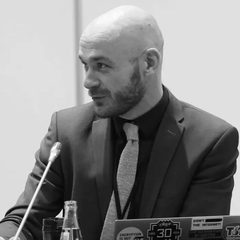
Niels ten Oever
Niels is an assistant professor in the European Studies department and co-principal investigator of the critical infrastructure lab at the University of Amsterdam. Additionally, he is a coordinator of the Tech, Power, and Policy theme group at the Amsterdam Centre for European Studies and a visiting professor at the Centro de Tecnologia e Sociedade at the Fundação Getúlio Vargas in Rio de Janeiro. His research focuses on how norms, values, and ideologies get inscribed, resisted, and subverted in communication infrastructures through their transnational governance.
-
Marloes Oomen
Marloes Oomen is Assistant Professor on the interface between sign language grammar and AI at the Amsterdam Center for Language and Communication, University of Amsterdam. She is co-director of SignLab Amsterdam, which leverages recent advances in AI to add new dimensions to UvA’s long tradition of theoretical sign language research.
-
Diederik Oostdijk
-
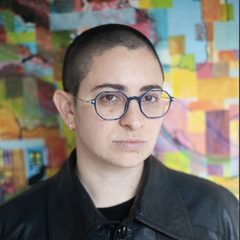
Delfina Martinez Pandiani
Assistant Professor of Cultural Data Analysis at the University of Amsterdam (Media Studies) and the Institute for Logic, Language and Computation (ILLC). Their work explores how abstract social concepts—such as identity, toxicity, and vulnerability—are negotiated and computationally modeled in datafied environments. Drawing on critical AI studies, computer vision, digital humanities, and media and queer theory, they specialize in auditing, developing, and critiquing AI systems.
-
Maro Pebo
-
Alexander Peine
Alexander is a professor of Culture, Innovation, and Communication at the Open University of The Netherlands. His research focuses on the intersection of population ageing and technological change where it transcends conventional interventionist views by exploring how ageing, care, and health are co-constituted with technology. Alexander is also the founding chair of the Socio-gerontechnology Network and the chair of the societal advisory board of the EU’s Joint Programming Initiative “More Years, Better Lives”

-
Gabriel Pereira
Gabriel Pereira is Assistant Professor in AI and Digital Culture at the University of Amsterdam (UvA), based at the Media Studies department and the Institute for Logic, Language and Computation (ILLC). His research focuses on critical studies of data, algorithms, and digital infrastructures, particularly those of algorithmic surveillance. www.gabrielpereira.net
-
Thomas Poell
Thomas Poell is Professor of Data, Culture & Institutions at the University of Amsterdam. He is program director MA Media Studies, co-founder of the Research Priority Area on Global Digital Cultures, and faculty lead for the national Human(e) AI & the Datafied Society sector plan. His research focusses on platforms, AI, and the transformation of the cultural industries. With colleagues from around the globe, he is currently developing a research project on Generative AI and Creative Work.

-

-
Jelena Prokic
Jelena Prokic is an Assistant Professor in Computational Linguistics at Leiden University. She is director of AI Humanities and DH Labs at the Faculty of Humanities. Her research aims to make advanced computational tools more accessible and interpretable for humanities scholars.
-
Hugo Quené
-
Stephan Raaijmakers
Stephan Raaijmakers is a professor of Communicative AI at the Centre for Linguistics.
-
Nevena Ranković
Nevena Ranković is an Assistant Professor in AI at Tilburg University. Her research covers software engineering, cybersecurity, and hardware reverse engineering, with applications of machine learning and deep representations in medical diagnostics, business intelligence, and graph-based analysis, emphasizing orthogonal array designs of experiments.
-
Annika Richterich
Annika Richterich is an associate professor in digital cultures at Maastricht University. Her research explores how digital practices and technologies co-shape innovation and knowledge production, focusing on hacker and maker communities, data ethics, and AI. She is a member of the multidisciplinary 'Trustworthy AI for Media Lab' (TAIM).
-
Barend de Rooij
Barend de Rooij is an assistant professor at Tilburg University. His research combines (applied) ethics in the field of AI with insights from virtue and vice epistemology. In his most recent work, Barend applies the framework of epistemic injustice to understand how algorithmic explanations can disadvantage certain communities of knowers.

-
Selena Savić
Selena Savic is an Assistant Professor for Proto-history of AI and Machines in the Arts, Department of Arts and Culture, University of Amsterdam. She works on critical and creative approaches to data, at the intersection of computational experimentation and postcolonial critique of technology, and coordinates the Human and AI major of the BA Global Arts, Culture and Politics.
-
Florian Schneider
Florian Schneider's research interests include questions of governance and public administration in the PRC, Taiwan, and Hong Kong, political communication strategies and political content of popular Chinese entertainment, recent Chinese economic developments, as well as Chinese foreign policy. He is also managing editor of the academic journal ‘Asiascape: Digital Asia’.
-
Tom Schoonen
Tom Schoonen is Assistant Professor of Philosophy of AI at the Institute for Logic, Language and Computation (ILLC) at the University of Amsterdam (UvA). His research focuses mainly on issues at the intersection of epistemology and philosophy of mind and in relation to artificial intelligence.
-
Massimiliano Simons
Massimiliano Simons is Assistant Professor in Philosophy of Technology at Maastricht University. His work can be situated within the tradition of historical epistemology, which analyses knowledge practices from an historical perspective. He is particularly interested in the role of technology in scientific practices, ranging from synthetic biology to data science.

-
Mirella De Sisto
Mirella De Sisto is an assistant professor at Tilburg University. Her current research focuses on sign language linguistics applied to language technology, the interface between poetry and linguistics (how verse can tell us something about how language works), and computational literary studies.
-
Jan Sleutels
-
Thomas Smits
I am an Assistant Professor of Digital History & AI at the University of Amsterdam. I'm a historian of modern visual (news) culture. Most of my work is located at the intersection of media history, media studies, and digital humanities. I apply digital methods to study large collections of historical illustrations, photographs and other images.

-
Siebren Teule
-
Liselore Tissen
Liselore Tissen is a postdoctoral researcher at Leiden University and TU Delft, focusing on digital humanities, ethics, and cultural heritage. She manages partnerships and research ethics at SSHOC-NL. Her research investigates how 3D printing impacts authenticity, durability, and conservation, influencing art history, conservation techniques, and museum practices. Additionally, she studies the ethical and emotional implications of digital innovations on artistic practices, sustainable conservation, and museum operations. Her work connects theory with practical applications to promote responsible and inclusive use of technology in cultural heritage.

-
Herman Veluwenkamp
Herman Veluwenkamp is an assistant professor of normative ethics and the digital society at the University of Groningen. His research focuses on conceptual engineering, meaningful human control, metaethics, and value-sensitive design. He has published in journals such as Mind, APQ, Synthese, and Inquiry but also actively engages with ethical questions surrounding new technologies in practice, including through his work with municipal ethics committees and interdisciplinary collaborations on AI governance.

-
Peter Verhaar
-
Lorella Viola
Dr Lorella Viola is Assistant Professor in Digital Humanities & Society at the Vrije Universiteit Amsterdam. In her research, she develops innovative digital humanities methodologies to investigate how power, latent assumptions and implicit ideologies are manifested through language and circulated in media and society. She also researches the impact of the digital transformation of society on knowledge creation theory and practice, including digital heritage practices.
-
Fernando van der Vlist
Fernando van der Vlist is Assistant Professor in Critical Data & AI at the University of Amsterdam (UvA), Faculty of Humanities, where he also coordinates the Master’s programme in Cultural Data & AI. His research focuses on the critical study of digital platforms and apps, their ecosystems, data, and artificial intelligence (AI) in culture and society. Author of Platforms: A Critical Introduction (Polity).

-
Amir Vudka
Amir Vudka is Assistant Professor of Film, AI, and Posthumanism in the Department of Media Studies at the University of Amsterdam and fellow researcher at ASCA (Amsterdam school of cultural analysis). His research focuses on media pathologies and esoteric media (the intersection of media and esoteric studies). He is also the Artistic Director of Sounds of Silence and Altered States, two experimental film and culture festivals based in The Hague.
-
Evelyn Wan
-
Matthijs Westera
Matthijs Westera investigates the connection between language, AI and curiosity, using methods from experimental and computational linguistics; he is involved in projects on AI guardrails and NLP for legal data.

-
Karin de Wild
Karin de Wild is theme coordinator of 'Human-centred AI' at Leiden University, assistant professor in contemporary museum and collection studies, and an art historian-curator. She has published widely on museums, digital arts, and cultures, and co-leads a Comenius Senior grant on Digital Heritage Education with Waag Futurelab and ZKM (Karlsruhe).
-
Illios Willemars
Ilios Willemars is Assistant Professor in Cultural Analysis and Literary Studies at Leiden University. Ilios works on placeholders, replacement, contagion, insurance, immunity, infrastructure, digitalization, the work of Franz Kafka, and animals that commit suicide.
-
Jan de Wit
Jan de Wit is an assistant professor at Tilburg University. His research focuses on the effects of emerging media, such as conversational agents, free-form play, games and live streaming in various domains (e.g., education, health and well-being). He has a background in Human-Computer Interaction.
-
Adam Łukawski
Music composer and computer programmer. Postdoctoral researcher in the ERC Advanced Grant "Posthuman Music" at Orpheus Institute in Ghent, Belgium where he leads Research Strand 3 exploring practice-based research on composition with agential AI, the creative use of smart contracts, algorithmic workflows, and particalisation of music. Co-founder of decentralised.art. Recently co-edited "Decentralized Music: Exploring Blockchain for Artistic Research" (CRC Press / Taylor & Francis).